





- Home
- Products
- Factory Application
- Portable Inverter Water Cooling Fan
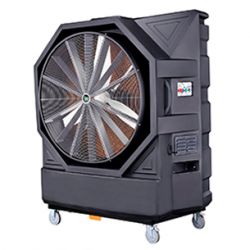
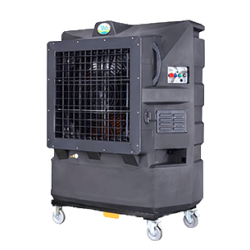
Portable Inverter Water Cooling Fan(UVC Light Optional) M502-COOL
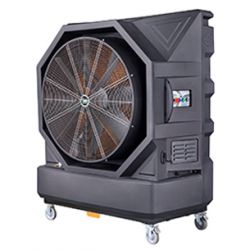
Portable Inverter Water Cooling Fan(UVC Light Optional) M602-COOL
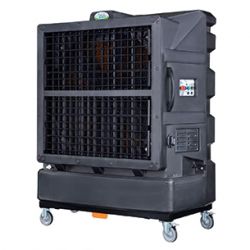
Portable Inverter Water Cooling Fan(UVC Light Optional) M603-COOL
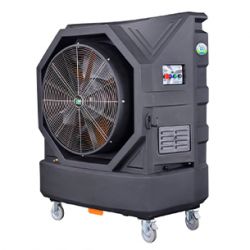
Portable Inverter Water Cooling Fan(UVC Light Optional) M702-COOL
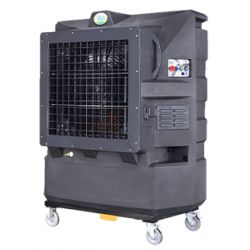
Portable Inverter Water Cooling Fan(UVC Light Optional) M703-COOL

Portable Inverter Water Cooling Fan(UVC Light Optional) M802-COOL
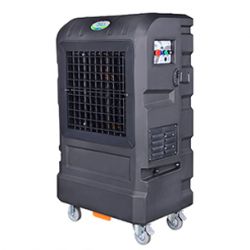
Portable Inverter Water Cooling Fan(UVC Light Optional) M902-COOL
Water-Cooled Fan FAQ
Yasoda has compiled the most comprehensive "Frequency Conversion Water-Cooled Fan FAQ," addressing everything from principles, selection, and maintenance to repair, answering the ventilation and cooling questions most important to businesses in one go.
1. Principles & Essentials
1. Is water cooling really better?
A water-cooled fan is not an air conditioner. It uses the physical principle of "heat absorption through water evaporation." The pump inside the unit draws water to the honeycomb-like "water cooling pad." When the high-volume fan blades pull air through the wet pad, the water evaporates, taking away heat, and blowing out air approximately 4-6°C cooler than the ambient temperature.
2. How much can a water-cooled fan lower the temperature?
It really does get cooler. Using the "heat absorption through water evaporation" principle, in a well-ventilated environment, the cooled air is usually about 4-6°C lower than room temperature. The drier the environment, the more significant the cooling effect; using ice can make the cooling effect even more noticeable.
3. Does a frequency conversion water-cooled fan need to be used in an air-conditioned room to cool?
Not necessarily. Its role depends on the environment.
In open spaces without air conditioning, such as factories or outdoors, the water-cooled fan acts as a standalone cooling device. Using evaporative heat exchange, it can convert hot airflow into air 4-6°C cooler than room temperature for direct cooling.
In large indoor areas with air conditioning, it is a powerful cooling partner, reducing the need for air conditioners to run at very low temperatures. This not only improves comfort by preventing over-dryness but also significantly saves electricity by accelerating cooling efficiency.
4. Which is better: portable air conditioner or water-cooled fan?
Air conditioners rely on compressors to "expel heat" for precise temperature control, requiring a closed space. Water-cooled fans use water evaporation to "absorb heat" and create a cooling effect, ideal for ventilated spaces, complementing air conditioning so the AC does not need to be set as low to achieve the same cool and energy-saving effect.
2. Selection & Technical
5. There are so many sizes of water-cooled fans. How do I choose the right model?
Instead of relying on floor area, choose based on "number of people," "usage location," and "air delivery distance":
- For large spaces (like big warehouses), select M502-COOL with an air delivery distance over 30m.
- For small stores, M102-COOLN with a 15m air delivery distance is sufficient.
6. How many fans do I need? How many people can one fan cover?
Industrial setups differ from household logic. Do not base calculations solely on floor area. Prioritize evaluating the "distribution of workstations" and "airflow coverage." Position the appropriate number of units according to the layout to precisely solve hot spots and achieve optimal cooling performance.
7. Which consumes more electricity, air conditioning or electric fans?
Yasoda products are energy-efficient. Industrial models, despite strong airflow, use only 300W to 1085W per hour (approx. 0.3 to 1 kWh). Compared to industrial air conditioners covering the same area, electricity costs can be reduced by over 80%.
8. Is it necessary to purchase a UVC sterilization lamp? How does it work?
If you value pure water, long-term odor control, or high hygiene requirements, it is strongly recommended. The UVC lamp emits specific UV wavelengths to penetrate bacteria and viruses in the water tank, directly damaging their DNA or RNA, rendering them inactive and stopping reproduction.
You can decide based on your environment. Feel free to visit our Taichung factory to see installation locations and effects firsthand.
9. Does high airflow make noise? Will it affect communication in indoor workspaces?
Industrial fans prioritize airflow and delivery distance. While high-speed operation produces normal wind noise, in open factory spaces, the volume is usually acceptable and does not hinder verbal communication.
For precise control over noise and cooling, the fans have a "frequency conversion stepless speed control" knob. You can adjust the speed from 0 to full. Lower it for quiet discussions, and increase to full speed for strong cooling. Since perception of airflow and sound varies, we invite you to experience the models at our Taichung factory for real feedback.
3. Maintenance & Service
10. How often should I add water? Do water-cooled fans require water?
Frequency depends on the model and humidity. If water is forgotten or the tank is empty, a low-water sensor will automatically cut off the pump to prevent damage. The fan will switch to "industrial fan mode," so the machine is safe but loses cooling effect.
Control panels have a separate "pump power" switch. When cooling is not needed or the tank is empty, turn off the pump and run the fan independently.
Large models support automatic water refill via a water pipe for continuous operation without manual refills.
11. How should I clean and maintain the fan?
It is recommended to clean once a week. Adjust frequency based on usage. Sediment can accumulate at the tank bottom, causing odors, reduced airflow, or pump blockage.
※Do not spray water on the control panel or frequency converter.
A. Turn off power
B. Use a long-handled soft brush to clean the tank from the ice addition port (do not scrub too hard)
C. Open the drainage hole to remove dirty water
12. What type of water should I use?
Tap water is generally sufficient. Industrial fans have large tanks, and tap water is convenient and contains residual chlorine to inhibit bacteria. Filtered water can reduce scale and extend the water pad life.
13. Can I add perfume or essential oils to the tank?
No. Oils form a film on the pad, blocking absorption and evaporation, reducing cooling efficiency and potentially damaging the motor.
14. How long does the water pad last? Can factory dust clog it?
The pad filters dust. Replace if airflow decreases, odor occurs, or scale builds up. Clean the surface with a water hose regularly.
4. Advanced Troubleshooting
15. Will more ice make it cooler? Can I fill the entire tank with ice?
Yes, ice lowers water temperature, but do not block the motor's water intake. Use frozen bottles instead of loose ice to prevent blockage, maintain cooling, and allow reuse.
16. I added water, but the pump seems inactive and the pad is dry. What should I do?
Check water level and pump sensor. Ensure the tank has enough water (above half) and is level. Clean the tank and float regularly. Contact Taichung HQ if issues persist.
17. What if the fan smells like a wet rag?
Usually caused by dirty tank water or bacterial growth on the pad. Clean the tank and replace with fresh water immediately.
18. How should I store the fan during winter?
Drain the tank and dry the pad before long-term storage. Run the fan without water for 30-60 minutes to dry the pad completely, then protect from dust. Periodically refresh tank water if not used daily.
19. What if the machine is out of warranty or parts are broken? Do you provide repair service?
We offer full after-sales service and parts supply. Taichung HQ stocks consumables and parts for both in- and out-of-warranty support. Contact our free service line 0800-258168 or 04-2527-8062, or return the fan for professional inspection and repair.