





- Home
- News
- Case Studies
- Kaohsiung Fastener Factory Ventilation Upgrade | Phased Installation of Negative Pressure Exhaust Fans to Eliminate Heat and Oil Mist Accumulation in Large Facilities
Kaohsiung Fastener Factory Ventilation Upgrade | Phased Installation of Negative Pressure Exhaust Fans to Eliminate Heat and Oil Mist Accumulation in Large Facilities
Project Highlights
In this project, Ya Suh Dar assisted Quan Xiong Industry, a screw manufacturing plant in Kaohsiung, with a comprehensive factory ventilation upgrade. The factory covers an area of approximately 4,000 pings. with a ceiling height of 10 to 12 meters, the facility employs over 100 on-site operators. Prolonged accumulation of oil mist and heat generated by operating machinery had led to stuffiness, elevated indoor temperatures, unpleasant odors, and poor air circulation.
Because the facility consists of four interconnected large buildings and one smaller building with shared airflow across zones, Ya Suh Dar implemented a phased improvement approach tailored to the on-site building structure, equipment layout, and primary heat sources.
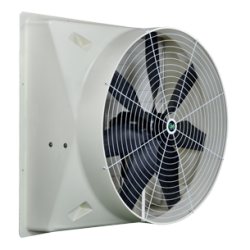
In Phase 1, 21 negative pressure exhaust fans were installed in designated buildings. After confirming the tangible improvements, the client commissioned Ya Suh Dar for Phase 2, which involved adding 98 industrial negative pressure exhaust fans alongside the construction of new roof exhaust monitors to progressively optimize ventilation across the entire plant.
Key Engineering Highlights:
- Location: Kaohsiung City
- Client Industry: Screw Manufacturing
- Factory size: Approximately 4,000 pings
- Ceiling Height: Approx. 10–12 m
- On-Site Workforce: Over 100 operators
- Phase 1: 21 negative pressure exhaust fans
- Phase 2: 98 negative pressure exhaust fans with new roof exhaust monitors
- Planning Approach: Phased ventilation upgrades tailored to site conditions
1. Facility Environment & Ventilation Needs
Quanxiong Industrial is a screw manufacturing plant located in Kaohsiung. The plant covers an area of approximately 4,000 ping (approximately 1,300 square meters), with a building height of about 10–12 meters and more than 100 workers on site.
Because operating production machinery generates oil mist and heat, these emissions tend to accumulate inside the facility. As operating hours extend, stuffiness, elevated indoor temperatures, and unpleasant odors gradually degrade the on-site working environment.
Through the installation of ventilation equipment, the client aimed to address the following issues:
- Indoor Stuffiness:Alleviating poor air circulation inside the large-scale facility.
- Heat Accumulation:Exhausting the heat generated by operating machinery.
- Oil Mist & Odors:Preventing the indoor accumulation of oil mist and unpleasant odors.
- Air Circulation:Increasing indoor airflow to improve the overall working environment.
However, taking the overall capital investment into consideration, the client opted to start with targeted zones first, expanding the installation scope gradually after verifying actual performance results.
2. Site Assessment: Ventilation Planning Challenges in Connected Buildings
Following an on-site assessment, Ya Suh Dar discovered that the facility is not a single standalone building, but rather an interconnected complex comprising four large buildings and one smaller building.
This structural layout allows airflow to circulate freely between different zones. Consequently, when planning the installation of negative pressure exhaust fans, it was essential to evaluate not only the required number of units, but also the spatial layout, equipment placement, and airflow direction.
The project faced three primary planning conditions:
- Expansive Facility Area:The space is approximately 4,000 pings, and ventilation improvement methods need to be assessed for different areas.
- Interconnected Buildings:Comprising four large buildings and one smaller building, the complex could not be planned simply as standalone structures.
- Phased Implementation:Phase 1 focused on upgrading a designated primary building first, with subsequent phases advancing based on the initial improvement results.
3. Phase 1: Implementation: Installing 21 Negative Pressure Exhaust Fans
Taking the client's goal of controlling initial capital investment into account, Ya Suh Dar recommended starting with targeted ventilation improvements in the first building of the interconnected complex.
Because this zone is interconnected with the adjacent buildings, planning could not rely solely on the footprint of a single structure; instead, it required accounting for the airflow dynamics of the surrounding spaces.
Drawing on years of industrial ventilation planning experience, Ya Suh Dar evaluated installation positions and intake airflow directions specifically around the primary heat-generating machinery in the first building, ultimately deploying a total of 21 negative pressure exhaust fans across the walls and roof.
The installation layout focused on the following key considerations:
- The layout of on-site production machinery and primary heat sources.
- Available mounting locations across the facility's walls and roof.
- The direction of incoming and exhaust airflow.
- Airflow circulation between the interconnected buildings.
Through thorough on-site assessment and strategic equipment placement, Phase 1 was able to prioritize the zones the client most urgently wanted to improve.
Phase 1 Installation Highlights
 |
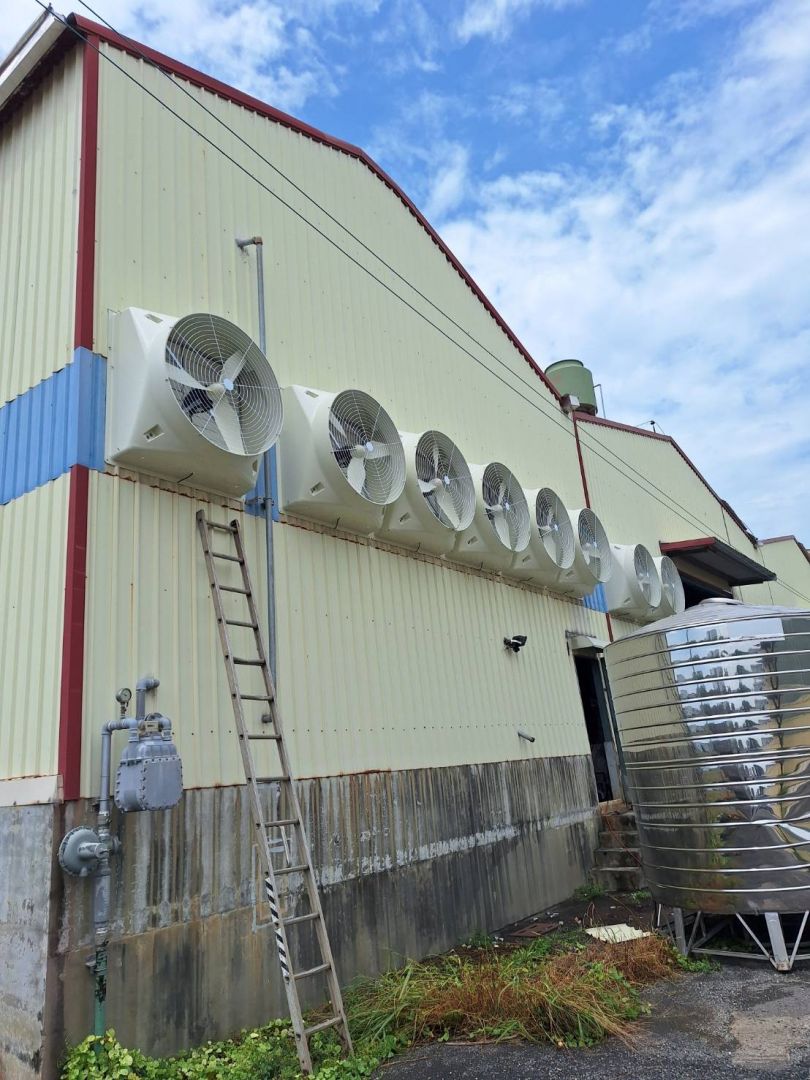 |
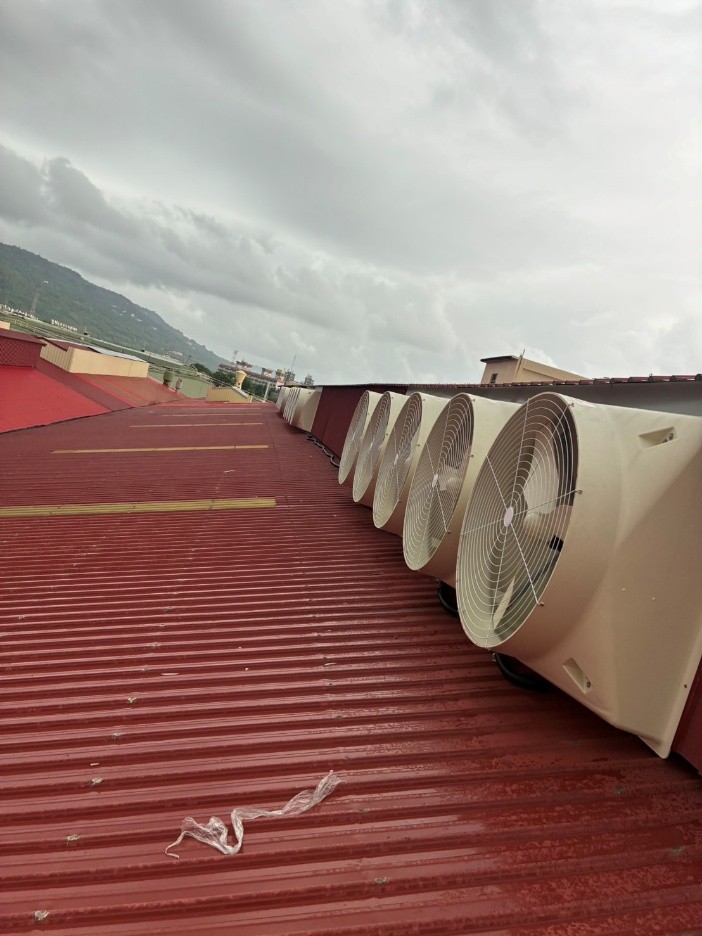
| Figure 1: On-site installation of Ya Suh Dar negative pressure exhaust fans on the facility roof. | Figure 2: On-site installation of Ya Suh Dar negative pressure exhaust fans on the facility wall. |
4. Expanding the Ventilation Upgrade Following Phase 1 Completion
Following the completion of Phase 1, the client reported noticeable improvements in the facility's previous issues with indoor stuffiness, elevated temperatures, and odor accumulation.
After verifying the improvements achieved in Phase 1, the client commissioned Ya Suh Dar to plan ventilation upgrades for the remaining factory buildings, officially launching the comprehensive Phase 2 implementation.
This progression turned what initially began as a targeted improvement project into a comprehensive, facility-wide ventilation upgrade plan.
5. Phase 2: Adding 98 Negative Pressure Exhaust Fans Paired with Roof Exhaust Monitors
Phase 2 encompasses ventilation system planning for the remaining factory buildings, featuring the planned installation of 98 industrial negative pressure exhaust fans paired with newly constructed roof exhaust monitors.
Rather than merely deploying exhaust equipment in isolated zones, this phase leverages comprehensive ventilation system planning and layout to improve facility-wide air circulation and expel oil mist and accumulated heat generated during operations.
Phase 2 Key Highlights
- 98 Industrial Negative Pressure Exhaust Fans:Expanding the deployment of exhaust equipment across the broader factory complex.
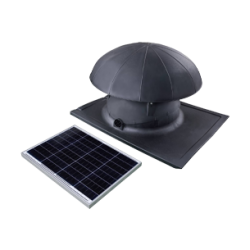
- Roof Exhaust Monitors:Integrated into the new construction to help expel accumulated heat from the facility.
- Comprehensive Ventilation Planning:Integrating exhaust equipment placement based on the facility's spatial layout and on-site operational requirements.
Following the full completion of the project, both on-site staff and management reported noticeable improvements in the working environment, particularly in air circulation, heat dissipation, and overall workplace comfort.
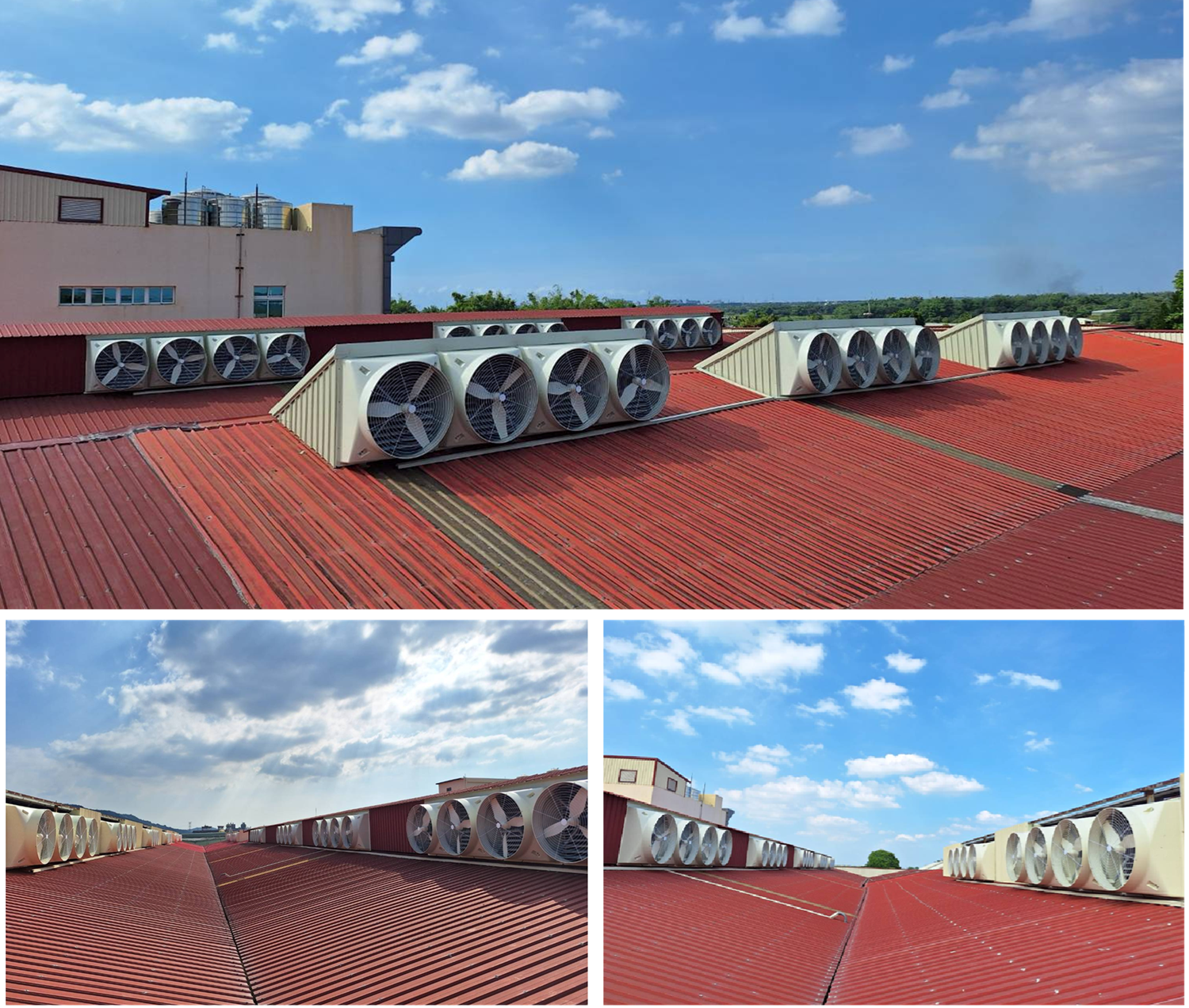
Figure 3: Kaohsiung fastener factory ventilation upgrade case study: Roof installation of Ya Suh Dar negative pressure exhaust fans.
6. Project Outcomes: Scaling from Targeted Improvements to Facility-Wide Ventilation
The project adopted a phased implementation approach—first upgrading designated factory buildings in Phase 1, and then advancing to facility-wide deployment in Phase 2 based on actual operational feedback from the client.
Phase 1 deployed 21 negative pressure exhaust fans, followed by 98 additional negative pressure exhaust fans paired with roof exhaust monitor construction in Phase 2—bringing the combined total across both phases to 119 negative pressure exhaust fans.
For large multi-bay factory complexes, effective ventilation upgrades go beyond simply increasing the number of exhaust fans; they require careful consideration of building structures, equipment heat sources, airflow dynamics, and cross-zone interactions.
This case study also demonstrates Ya Suh Dar's end-to-end service capabilities—spanning on-site assessment, ventilation planning, equipment configuration, and installation—helping the client systematically achieve facility-wide ventilation upgrades tailored to their operational needs.
A well-ventilated, healthy production environment does more than support day-to-day operations—it reflects a company's commitment to employee well-being and sustainable, long-term growth.
7. Ya Suh Dar Industrial Ventilation Improvement Services
Because facilities across different industries vary significantly in spatial scale, building structure, equipment heat sources, and operational requirements, the number and placement of negative pressure exhaust fans cannot be determined solely by floor area.
Ya Suh Dar provides industrial ventilation equipment and integrated engineering services—spanning on-site assessment, ventilation planning, equipment configuration, and installation—helping enterprises design tailored ventilation solutions suited to their specific facility conditions.
If your facility is also experiencing any of the following conditions:
- Large factory floor area with poor indoor air circulation.
- Production equipment continuously generating heat.
- Easy accumulation of oil mist or odors.
- High factory ceilings causing heat to accumulate overhead.
- A need to improve ventilation conditions in phased stages.
Feel free to contact Ya Suh Dar and share your facility dimensions, equipment layout, and on-site photos—our specialists will assess your conditions and recommend the most suitable ventilation upgrade solution.
Ya Suh Dar | Industrial Ventilation & Negative Pressure Exhaust Systems
From on-site assessment to equipment installation—helping enterprises build healthier, better-ventilated workspaces.
[Contact Us: 0800-258-168 | Schedule a Factory Ventilation Assessment]